
Origin:
Shellac is mainly produced in India and Thailand. Smaller quantities come from China and Vietnam. The product is manufactured in a process known since the old times as melting filtration. Nowadays hiqh-quality, dewaxed and decoloured Shellac is manufactured.
Components:
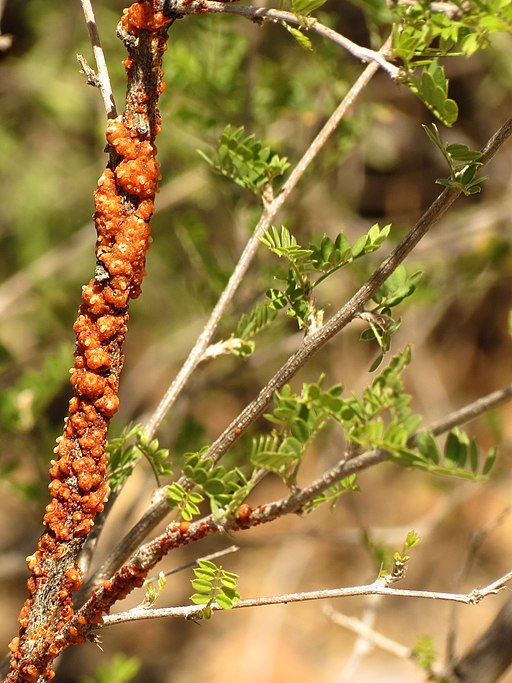
Raw Shellac (sticklac) contains 60-80 % pure Shellac, 4-6 % Shellac Wax and impurities such as splinters of wood, dead insects and moisture. Seedlac is washed and purified Sticklac and consists, according to its quality, of 85-90 % pure Shellac, 5-8 % Shellac Wax and 2-5 % impurities.
Packing:
Jute bags of 25 KGS or 50 KGS NETT
Paper bags of 25 KGS NETT
COTTON BAGS OF 25 & 50 KGS NETT.
Uses:
Wood Treatment (primers, high gloss and mat polishes); Electrics (insulators); Printing inks, inks and china inks; Cosmetics ( binder for mascara, shampoo, film former for hairspray, micro incapsulation of fragrances); Food (fruitcoatings, parting and glazing agent for confectionary and chocolates); Pharma (tablet coating); Abrasives (binder for grinding wheels); Dental; Hat manufacturing (for stiffening); Conditioning for wooden floors; Leather finishes; Pyrotechnics; Coating of seeds; Micro incapsulation of dyestuffs.
TRADE NAMES:
- English: Shellac
- German: Schellack
- French: Gomme Laque
- Spanish: Goma Laca
- CAS Number, 9000-59-3
- ITC HS CODE FOR LAC AND LAC BASED
| 1 | Lac | 130110.00 |
| 2 | Shellac handmade (Excluding button lac) | 130110.01 |
| 3 | Shellac machine made (Excluding garnet lac) | 130110.02 |
| 4 | Seedlac | 130110.03 |
| 5 | Stick lac | 130110.04 |
| 6 | Dewaxed & Decolourised lac | 130110.06 |
| 7 | Bleached lac | 130110.07 |
| 8 | Gasket lac | 130110.08 |
| 9 | Button lac | 130110.11 |
| 10 | Garnet lac | 130110.12 |
| 11 | Other lac | 130110.19 |
| 12 | Lac-dye | 320300.03 |
| 13 | Aleuritic acid | 330290.03 |
| 14 | Shellac wax | 152190.02 |
Shellac
- is a hard, amorphous resin
- has a good resistance against solvents based on hydrocarbons
- is not toxic
- is physiologically harmless
- is thermoplastic
- is approved for various applications in the food industry
- has a low melting point (about 90°C)
- is soluble in lower alcohols and various other solvants
- is UV-resistant
- is water soluble in water-alkaline solutions
- has excellent dielectric properties, dielectric strength, a low dielectric
- constant, good tracking resistance, etc.
- has excellent film forming properties
- forms smooth, high gloss films and surfaces
- coatings do not change their electrical properties under UV-radiation
- coatings have excellent adhesion to many substrates
- coatings can be polished
- has a low thermal conductivity and a low coefficient of expansion